The Hidden Cost of Poor Infrastructure: How Roads and Electricity Shape a Community’s Future
When people picture community development work, infrastructure rarely comes to mind first. Education, healthcare, and economic empowerment tend to capture attention and imagination in ways that roads, power lines, and water systems simply don’t. But ask anyone who has actually tried to deliver a vaccine to a remote clinic, get a child to school during rainy season, or transport farm produce to market before it spoils, and you’ll hear a different story — one where infrastructure isn’t a background detail, but the very foundation that determines whether everything else is even possible.
At the Asuga Community Initiative, Infrastructure Development is one of our seven core program areas, not as an afterthought, but because we’ve come to understand — as many development organizations eventually do — that infrastructure gaps quietly undermine progress in nearly every other area of community life.
The Invisible Tax of Poor Roads
It’s easy to underestimate how much a bad road costs a community, because that cost rarely shows up as a single, dramatic event. Instead, it accumulates quietly, in dozens of small ways, day after day.
A farmer with a strong harvest but no reliable way to transport it to market before it spoils effectively loses a portion of that harvest to the road itself. A pregnant woman experiencing complications during childbirth may face a dangerously long journey to the nearest clinic capable of handling an emergency delivery. A teacher assigned to a rural school may struggle to reach it consistently, leading to unpredictable school closures that compound over a child’s education.
None of these costs appear on a balance sheet in an obvious way, which is part of why infrastructure investment can be harder to justify to funders than a program with a clearer, more immediate before-and-after story. But the cumulative effect on a community’s economic development and general wellbeing is enormous — and often invisible only because it has become so normalized.
Electricity as a Multiplier, Not a Luxury
In communities without reliable electricity access, life doesn’t stop — but it does slow down and become more constrained in ways that are easy to overlook if you’ve never experienced it directly. Children studying by candlelight or phone flashlight after dark face a harder path to consistent academic performance than those with reliable lighting. Small business owners lose the ability to refrigerate perishable goods, extend working hours safely, or use basic power tools that could make their work more efficient. Health clinics without dependable power struggle to store vaccines and medications that require refrigeration, or to operate essential equipment during emergencies.
Electricity access functions less like a single amenity and more like a multiplier that makes nearly every other kind of development work more effective. A well-run health outreach program becomes more sustainable when the clinic it operates from has reliable power. An adult literacy class becomes more accessible when it isn’t limited to daylight hours. This is precisely why infrastructure development sits alongside, rather than separate from, ACI’s health, education, and economic empowerment programming.
Water Access and the Time Tax on Women and Girls
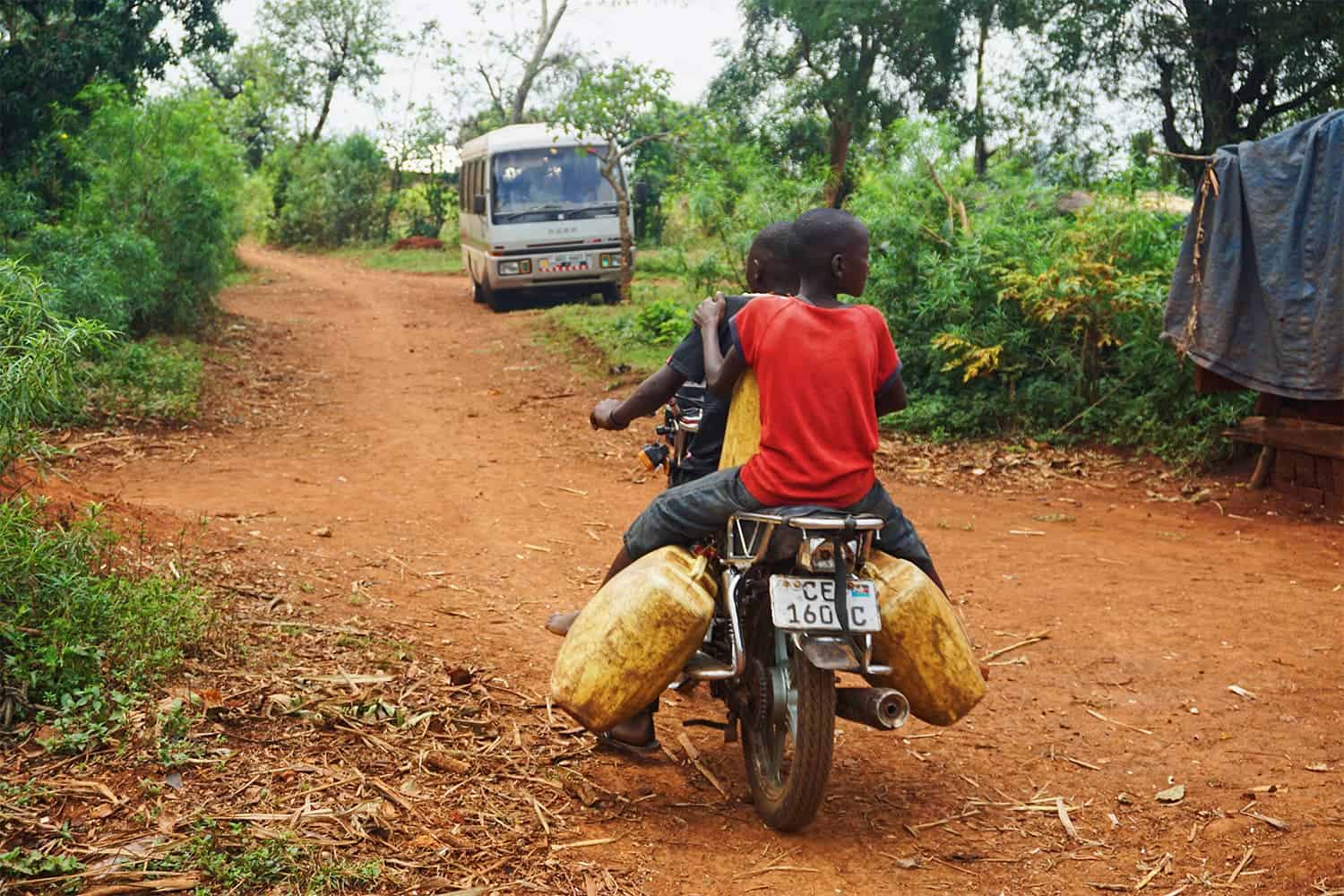
Among the many infrastructure gaps that affect rural and underserved communities, unreliable access to clean water carries a particularly disproportionate cost for women and girls, who in many communities bear primary responsibility for water collection. In areas without nearby, reliable water sources, this can mean hours spent walking to and from distant wells or rivers every single day — time that could otherwise go toward schooling, income-generating work, or simply rest.
This is sometimes referred to as a “time tax,” and it’s a useful way to think about infrastructure gaps more broadly: they don’t just create direct hardship, they consume time and energy that could otherwise be invested in exactly the kind of activities — education, business development, community engagement — that other development programs are trying to promote. Improving water access doesn’t just reduce the risk of waterborne illness; it returns time to the people who need it most to build a better future.
Why This Work Is Slower and More Complex Than It Looks
Infrastructure development is, by its nature, more complicated than many other kinds of community programming. Building or repairing a road, extending an electrical grid, or establishing a reliable water system typically requires coordination with local and sometimes national government bodies, utility providers, and technical specialists — coordination that a single NGO cannot simply replace on its own.
This is why ACI’s approach to infrastructure work leans heavily on partnership and advocacy rather than attempting to independently construct large-scale infrastructure projects alone. In practice, this means assessing infrastructure gaps directly with affected communities to understand which needs are most urgent, advocating with local government and development agencies for road, school, and clinic construction, and coordinating with utility partners to extend electricity and water access to underserved areas — while also training local maintenance committees, so that new infrastructure doesn’t quietly fall back into disrepair once initial construction is complete.
The Maintenance Problem Nobody Likes to Talk About
One of the least glamorous but most important parts of infrastructure work is what happens after construction is finished. A borehole that breaks down eighteen months after installation, with no local capacity or funding to repair it, isn’t meaningfully different from no borehole at all — except that it may have consumed significant donor funding along the way.
This is why community-based maintenance planning is treated as a core part of ACI’s infrastructure approach, not an optional add-on. Training local committees to maintain new infrastructure, and building community ownership over its upkeep from the earliest planning stages, is often what separates infrastructure investments that last for decades from those that quietly fail within a few years.
Infrastructure as the Foundation Beneath Everything Else
It’s worth returning to the core idea that ties this program area to the rest of ACI’s work: infrastructure isn’t competing with education, health, or economic empowerment for importance — it’s the foundation that determines how far those other programs can actually reach. A brilliant health outreach program still depends on a road that can get a mobile clinic to a village. A promising savings cooperative still depends on members being able to physically reach markets to sell what they produce.
This is why supporting infrastructure work, even though it may feel less immediately emotionally resonant than funding a school or a health visit, has a multiplying effect across nearly everything else ACI does.
The Economics of Waiting Versus Investing Early
There’s a pattern that shows up consistently in infrastructure planning research: the cost of delaying a needed infrastructure investment is almost always higher than the cost of making it earlier, even though delay often looks like the more affordable choice in the short term. A road left unpaved doesn’t stay in the same condition indefinitely — it deteriorates further with each rainy season, becoming more expensive to eventually repair than it would have been to properly build in the first place. A community without electricity doesn’t simply wait patiently for it to arrive; businesses that could have formed and grown in the meantime often never do, representing a real, if harder to measure, economic loss.
This is part of why infrastructure investment can be a difficult case to make to funders focused on immediate, visible impact, even though the long-term economic argument for early investment is often quite strong. A road built today isn’t just avoiding tomorrow’s higher repair costs — it’s actively enabling economic activity, health outcomes, and educational access that would otherwise simply not happen during the years of waiting.
Learning From What Doesn’t Work
It’s worth being honest that not every infrastructure project in community development history has succeeded, and there’s real value in understanding why. Some of the most common failure patterns include infrastructure built without genuine community input, resulting in a road or water system that doesn’t actually serve the routes or needs local people rely on most; construction rushed to meet a funding deadline rather than built to a standard that will hold up over years of use; and, as mentioned above, a lack of any real plan for long-term maintenance once the initial construction team has moved on.
Each of these failure patterns points to the same underlying lesson: infrastructure work succeeds or fails based on decisions made well before and after the actual construction phase — in the planning conversations with the community beforehand, and in the maintenance planning that follows. This is why ACI treats both of those phases as seriously as the physical construction itself, even though they’re far less visible in a single before-and-after photo.
Where You Come In
If understanding this hidden cost has changed how you think about what “development” really requires, there are direct ways to help close these gaps. You can support our Infrastructure Development program directly, contributing toward the advocacy, partnership-building, and community-based maintenance training that make lasting infrastructure improvements possible. If you have experience in civil engineering, utilities, or project coordination, we’d also welcome you as a volunteer. And if your organization works in infrastructure, government relations, or utilities, we’d be glad to explore what a partnership with ACI could look like — because closing these gaps is never work one organization can do alone.